

Web Development Service
hello this
- Great team
- Waaahhhhh Kya baat hai
- Best in the World
Full Description
An IP Address (Internet Protocol Address) is a unique numerical label assigned to each device connected to a computer network that uses the Internet Protocol for communication. It serves two main purposes:
- Identifying a device on the network.
- Locating the device to enable communication with other devices over a network like the Internet.
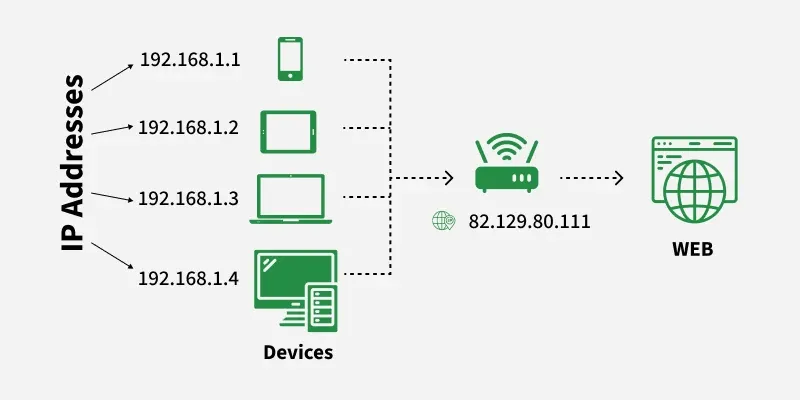 IP Address
Note: In simple terms, an IP address acts like a digital home address, allowing data to be sent and received between devices correctly.
Components of an IP Address
- Network Portion: Identifies the network to which the device belongs.
- Host Portion: Identifies the individual device on the network.
- Subnet Mask (for IPv4): Defines which part of the IP is network and which part is host.
Example: IP 192.168.1.10 with subnet mask 255.255.255.0
Network ID: 192.168.1.0
Host ID: 10
Types of IP Address
IP addresses can be classified in several ways based on their structure, purpose, and the type of network they are used in. Here's a breakdown of the different classifications of IP addresses:
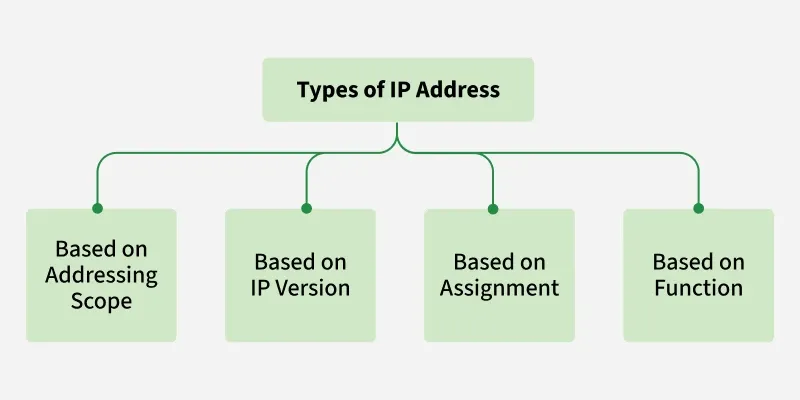 Types of IP Address
1. Based on Addressing Scope (IPv4 vs. IPv6)
1.1 Public IP Addresses
A Public IP address is assigned to every device that directly accesses the internet. This address is unique across the entire internet. Uniqueness & Accessibility are its key characteristics & are assigned by Internet Service Providers. When you connect to the internet through an ISP, your device or router receives a public IP address. These addresses can be static or dynamic.